
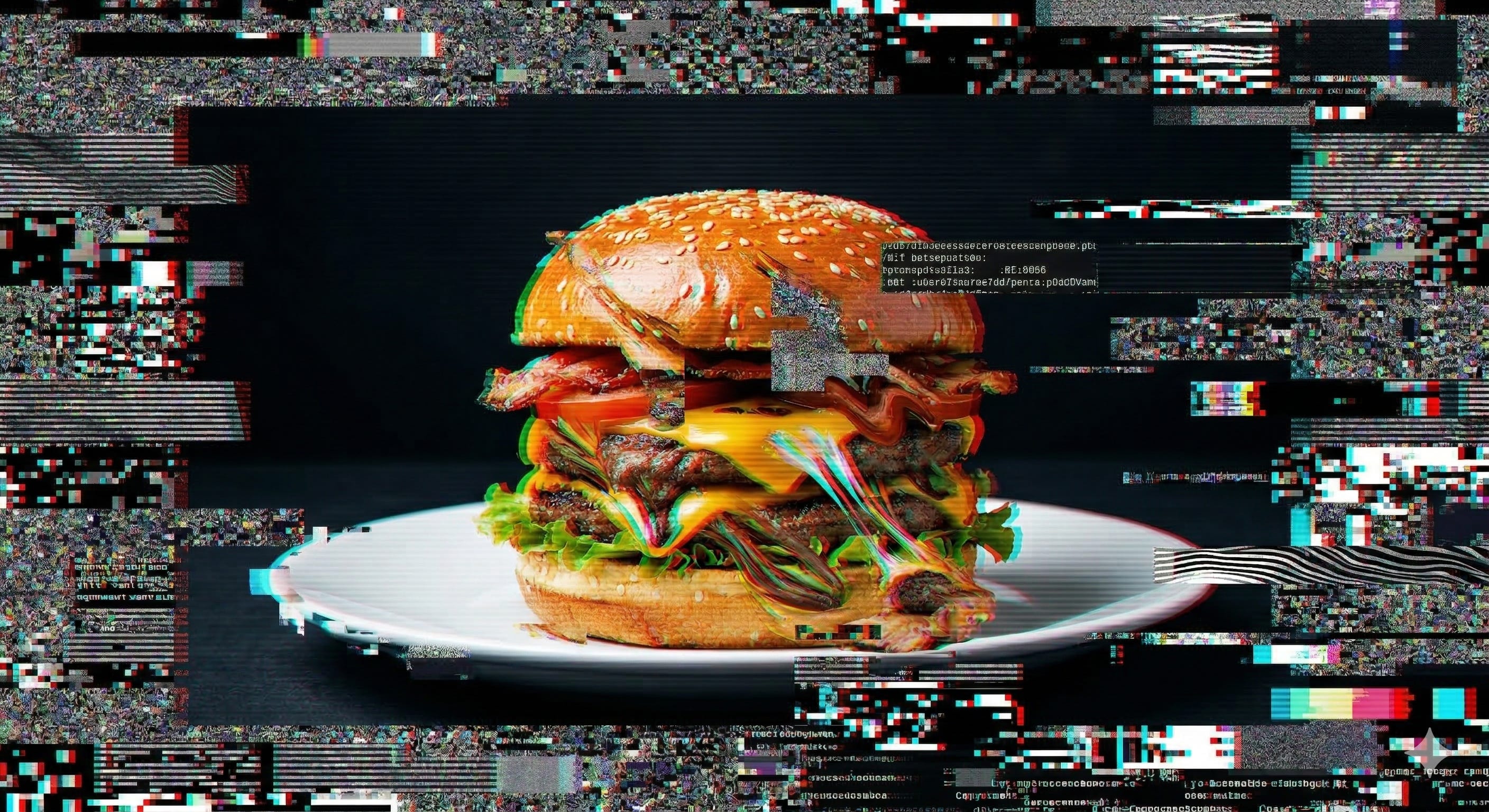
We’d ordered from a place a few times during Covid and loved the burgers. Months later, we were on a walk, got hungry, and thought we’d swing by while we were in the neighborhood — sit down, have the thing properly. It wasn’t a restaurant anymore. There was a window and a fleet of bike delivery riders ten deep. If you peered through the glass you could see the empty tables. The restaurant was not really a restaurant anymore, it was just a kitchen.
Two Firms. One Room.
An intermediary arrives with something genuinely useful: reach, efficiency, a customer base it has already built. The price is the customer relationship. It is not a reasonable trade and someone will be standing outside with their face against the glass.
In 2003, the question on the table for a large auto lending business was whether to join DealerTrack — a platform that let car dealers submit financing applications to multiple lenders simultaneously, letting lenders compete in real time. Two consulting firms were working on the same question without knowing it (awkward!) A boutique had done ride-alongs with dealer sales teams, spent time on the floor, crunched the numbers. McKinsey had a contract several times larger. The recommendations were opposite.
The lender had built a reputation in the subprime auto market — loans to borrowers with poor or no credit, deals others wouldn’t touch because they had a different risk thesis. Dealers knew this. They routed specific profiles to our lender. That selectivity, their brand, was the edge. DealerTrack’s grid had no field for it. Joining was a race to the bottom. That’s what we said.
McKinsey’s case won the day: the efficiency gains were real, the market was moving.
Data Compounds
DealerTrack grew from five lenders to more than fifteen hundred.¹ The lenders who built the platform — JPMorgan Chase, Wells Fargo, AmeriCredit — made a rational calculation: efficiency gains and an equity stake in the infrastructure. When Cox Automotive acquired DealerTrack in 2015 for four billion dollars, the founding lenders collected their premium. The lenders who joined without equity got the volume, and the competition volume required — faster decisions, higher approval rates, terms the platform set.
The price for audience and volume, at the time, was not discussed as relationship. It was described as data-sharing. Twenty years ago, the architect of Tesco’s Clubcard loyalty program put it plainly: data is the new oil.² Customer behavior, repeat patterns, the profile of who comes back and why — that is the refined product. What looks like a byproduct at the point of entry becomes the relationship in its most durable form. In a data-driven economy, when you hand a platform your customer data in exchange for volume, you are giving away the thing that was going to compound.³
McKinsey was right about the near and medium term. We were right about the final destination.
The Sad Empty Dining Room
The restaurant on the other side of the glass was running a similar calculation. DoorDash and Uber Eats charge restaurants between 15 and 30 percent commission per order.⁴ In exchange: reach, and during the years when dining rooms were closed, a way to survive. Those are real things.
What is also real: restaurant net profit margins average three to five percent. A 30 percent commission could invert it. The platform could earn more per delivery order than the restaurant does. By 2025, 53 percent of restaurant operators said they were actively trying to reduce their reliance on third-party delivery.⁵ The math had caught up.
The platform knows which customers come back, how often, what they order, where they are. The restaurant knows it filled an order and maybe a few insights from the platform. The customer who loved the burger enough to want to explore the experience, found a window. You cannot build a robust business that way. You can only build a kitchen that uses a very expensive distribution channel that it doesn’t own and can’t control.
The brands that understood the importance of data built direct infrastructure. Starbucks invested in its own app and loyalty program while competitors leaned into third-party platforms; it now counts 34.6 million active US members, with nearly 60 percent of its American sales running through that direct relationship.⁶ The data those customers generate including what they order, when they come, how often, what brings them back; stays inside the brand rather than accruing to an intermediary. What Starbucks was building was the thing the platform was trying to own. The Discovery Tax — the compounding cost of ceding how your customers find you, return to you, and choose you again — was already accruing for every restaurant that didn’t.
The Frictionless Trap
When you compete through someone else’s interface, you compete on their terms. What you could express before — the judgment that made certain dealers route specific profiles to you, or something that makes someone want to walk through your door — stops being legible. The interface is not a limi
tation. It is the point.
The rational economic case for joining is always real. That is The Frictionless Trap. It’s not that the argument is wrong, but that it is right for a shorter time horizon than perhaps the one that matters. The efficiency gains arrive as described. The race to the bottom arrives later.
The Next Wave
In January 2025, OpenAI launched Operator — its AI agent — with a Shopify integration that never got beyond thirty merchants before the company pulled back on that approach. Brands read this as a retreat. They were misreading it.
The actual move was the Operator layer, announced November 2024 and live with Target, Instacart, Expedia, and Booking.com by 2025: ChatGPT completing transactions inside the conversation without surfacing a product page, a brand, or a choice.⁷ The purchases still route through the retailer’s own app — OpenAI is not the checkout. It is the layer that decides where you go. That is the more powerful position. A checkout button can be replicated. The intent layer cannot.
When the agent handles the purchase, your brand doesn’t get rejected — it simply never appears. The customer never browses, never compares, never decides. There is no moment in which your brand could make an impression, earn a preference, or begin to mean something. This is Agentic Invisibility: the brands in the consideration set are never seen by the buyer. The comparison site era and the delivery platform era both at least required a decision on the part of businesses to join or not. This time, the agent layer isn’t asking.
What is actually worth protecting, and how do you hold it when the infrastructure is already a speeding train? These are the biggest questions marketers should be asking themselves — because nearly 75% of all restaurant traffic now happens off premises, according to the National Restaurant Association. Sounds more like a bunch of kitchens to me.
Footnotes
¹ DealerTrack: 5 founding lenders (2001); 1,400+ by December 2013 (BusinessWire); 1,500+ current. Cox Automotive acquisition: $4 billion ($63.25/share), October 2015.
² Clive Humby, ANA Senior Marketer’s Summit, 2006.
³ Hagiu & Wright, “Data-enabled learning, network effects, and competitive advantage,” RAND Journal of Economics, 54(4), 2023.
⁴ DoorDash/Uber Eats commission rates 15–30%, confirmed via merchant portals, Q1 2026.
⁵ Toast/National Restaurant Association operator survey data, 2024–2025. Net profit margin figures: Toast Restaurant Industry Report, 2025.
⁶ Starbucks Q1 FY2025 earnings: 34.6M active US members, ~59% of US company-operated store sales.
⁷ OpenAI Operator: announced November 2024, research preview January 2025, full ChatGPT integration July 2025. Confirmed partners include Instacart, Target (joined November 2025), Expedia, and Booking.com.