
Most of what gets called brand strategy in 2026 is built on the assumption that a company can own its audience, its story, and its destiny if it executes well enough on its own. That was a coherent theory when distribution was fragmented and attention was directly addressable. It does not survive contact with a commerce layer where the customer hands the decision to an agent. The agent does not have brand loyalty, it has optimization parameters. A logo is nothing to it. A shared quality standard it has been trained to consult means everything.
One defense against the coming disintermediation is coalition. Not a partnership, not a collab, not co-marketing. Coalition in the older, harder sense. Entities pooling enough shared infrastructure that the coalition becomes the thing the market has to route through rather than around.
This is not a new idea. It is the oldest answer on the books for fragmented producers facing a consolidated buyer, and it has been working in other categories for a century. It is new for most of us because we’ve spent that century thinking of each other as competitors rather than as co-producers of a category, segment, lifestyle, or industry. The reality is, when we get squeezed, we all get squeezed together.
What a Coalition Actually Is
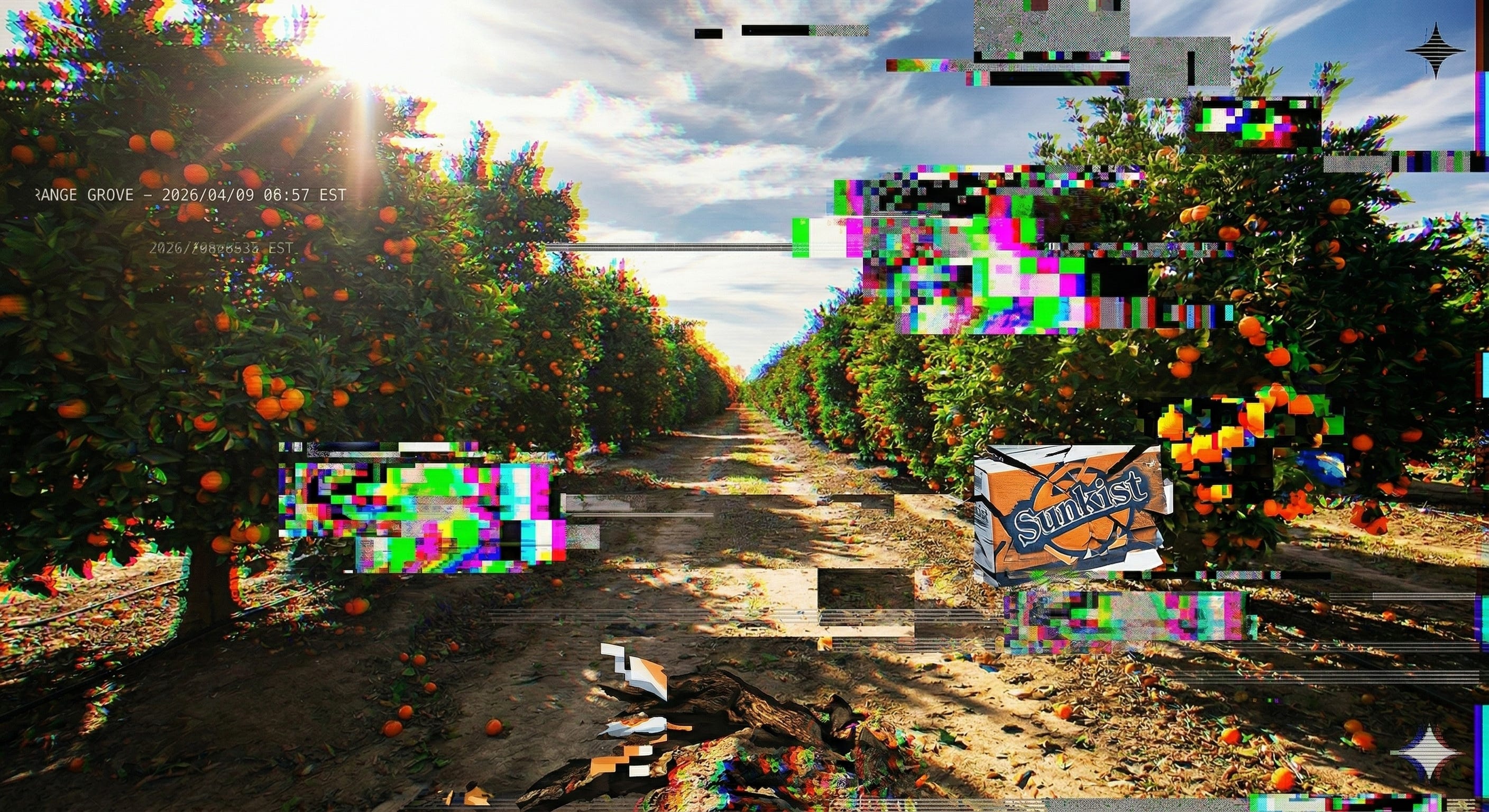
The cleanest example is American agriculture in the early twentieth century. Orange growers in California were going broke because buyers and middlemen — railroads, wholesalers, brokers — could extract whatever margin they wanted from a producer base of family farms too fragmented to negotiate back. The growers formed a marketing cooperative called the California Fruit Growers Exchange; it is now called Sunkist. Dairy farmers in Minnesota called theirs Land O’Lakes. Cranberry growers in Massachusetts created Ocean Spray. Nearly a century later, all three are still operating. We remember them as brands, but the logo on the box was a consequence of the coalition underneath, not the reason for it.
What made these coalitions hard to route around was the infrastructure they pooled. Shared quality standards that insurers and regulators could rely on. Collective bargaining power on inputs that made the unit economics work for members and made them stop working for non-members. Political representation with enough aggregated member count to actually get heard in the rooms where rules get written. Shared certification and lab capacity that absorbed the cost of being credible. Liability pooled across members, which made the coalition the natural place for a regulator, a retailer, or now an algorithm to verify a claim.
A coalition can be a member-owned cooperative, a joint venture consortium, a 501(c)(6) industry association, a nonprofit standards body, a certification scheme, or a member-owned LLC. The legal form is a downstream decision about tax, governance, and liability tradeoffs. The functional test is upstream: can the entity pool infrastructure that members cannot build alone, and is the governance neutral enough that no single member steers it. This is the base case Mancur Olson described in The Logic of Collective Action — coalitions hold together when non-membership costs more than membership, usually through selective benefits members cannot replicate alone.1
The Trust Layer Job
In agentic commerce, this infrastructure takes on a second job. AI systems will eventually need external verification layers to consult because models cannot generate ground truth they were never trained on. The version that matters for a brand operator is narrower and more concrete: when an agent is asked a question where being wrong is expensive, it will consult a source that can absorb the liability for the answer. That source cannot be the brand itself. It has to be a neutral, funded, audited structure the agent operator can point at when something goes wrong.
This job is not hypothetical — it is exactly what Underwriters Laboratories has done for electrical products since 1894. Retailers, insurers, and regulators route through UL certification because self-attestation is problematic and UL absorbs the liability for getting it wrong. The Forest Stewardship Council plays the same role for timber, Fair Trade for commodity supply chains, and the Good Housekeeping Seal has done a consumer-facing version since 1909. Each exists because an industry needed something no single member could credibly produce, and the market built the coalition into its plumbing. What changes in an agentic world is the consulting party — not a regulator or a retailer but an algorithm executing purchases on someone’s behalf. The structural need is identical.
The liability argument needs a qualifier given how platforms have mostly skirted accountability in the last two decades. Agent-mediated commerce is a different legal animal than, say, content moderation. When an agent executes a purchase with someone’s money, it is structurally closer to a retailer than a publisher, and retailer liability has real case law underneath it.2 Add the EU AI Act and the Digital Services Act, and the pressure is real. The risk is bigger for physical goods in categories where someone can get hurt, and the first movers will define a lot of the rules latecomers follow.
The Juice Is Worth the Squeeze
Most brands hate the idea of coalition because it feels like giving up sovereignty. For ninety-nine percent of brands, that sovereignty is already an illusion. The brand is already paying close to half its gross revenue to platforms for the privilege of being seen. Marketplace Pulse estimates Amazon’s true take rate, including the required advertising spend, referral, and fulfillment fees, at around fifty percent for a typical private-label seller, up from forty percent five years earlier.3 I call it a Discovery Tax; it is levied by platforms on every transaction the brand cannot route around. Oliver Williamson’s transaction cost economics anticipated this decades ago. When the cost of making each exchange through the open market gets high enough, producers either get absorbed into a hierarchy or pool into a coalition that internalizes those costs together.4 Coalition is not a loss of independence. It is the redirection of a tax the brand is already paying, into infrastructure the brand actually owns.
The part that should matter most to a brand operator is that the coalition is worth building even if the agentic thesis turns out to be overstated. If the only reason to create one is that an AI agent might one day consult you, it is a speculation and a bad one. But if the coalition produces collective bargaining on packaging glass, shared cold chain, pooled regulatory and compliance filings, joint legal defence, shared lab certification, pooled media buys, and political representation that actually moves legislation — then the coalition pays for itself in line items a CFO can find tomorrow. The agentic upside is the ceiling, not the floor.
A fair objection: even if agents do consult a coalition’s verification layer in 2027, the largest agent operators are building their own proprietary trust layers and will cut coalitions out. Probably. It does not change the calculation. Temporary moats that get used well compound into durable advantages — member-generated data, regulatory relationships, political capital, trust that was earned rather than bought.
The alternative is not keeping sovereignty. The actual alternative is being a permanent tenant on someone else’s trust layer.
What You Would Need to Believe
Coalition works when incentive alignment between members is tight enough that defection is materially costly. In 2026 terms, that cost has to be concrete: loss of access to the shared testing registry the major agents are trained to consult, removal from the safe-to-purchase list that absorbs liability for the agent operator, being locked out of the collectively negotiated supplier contracts that made the unit economics work in the first place. Members have to share real infrastructure and not just a badge.
You would need to believe that governance can be neutral enough that no single member steers it. The history of producer coalitions is largely a history of one member trying to own the group and the group dissolving. And you would need to believe that what the coalition produces is something members genuinely cannot produce alone at the same cost. These are the classic conditions Elinor Ostrom identified across a lifetime of fieldwork on commons governance.5 They have been studied for fifty years in other categories.
The work of making a brand legible to agents — schema markup, structured product feeds, agent-readable content pipelines — is necessary and insufficient. Algorithmic Legibility puts you in the table with your features and removes you from consumer view. Coalition infrastructure changes what the algorithm has to consult in the first place.
Orange growers in California figured this out with no internet, no AI, and no Digital Services Act to lean on. They had a consolidated buyer extracting margin, and the mathematics of surviving it alone did not work.
Footnotes
Mancur Olson, The Logic of Collective Action: Public Goods and the Theory of Groups (Harvard University Press, 1965).
Bolger v. Amazon.com, LLC, 53 Cal. App. 5th 431 (2020). Oberdorf v. Amazon.com Inc., 930 F.3d 136 (3d Cir. 2019). EU AI Act (Regulation (EU) 2024/1689) and the Digital Services Act (Regulation (EU) 2022/2065).
Marketplace Pulse, “Amazon Takes a 50% Cut of Sellers’ Revenue” (February 2023). More recent reporting puts the figure at 50–60% for typical private-label sellers.
Oliver Williamson, Markets and Hierarchies: Analysis and Antitrust Implications (Free Press, 1975) and The Economic Institutions of Capitalism (Free Press, 1985).
Elinor Ostrom, Governing the Commons: The Evolution of Institutions for Collective Action (Cambridge University Press, 1990).